Why Your Child's Childhood Brings Up Your Own


Share
You are not the parent you thought you would be. Not because you are doing it wrong - but because you are doing it while carrying everything that was ever done to you.
You had a vision of yourself before children. Patient. Present. Nothing like the parts of your own upbringing you swore you would leave behind. And then a Tuesday happens. Your child will not put their shoes on, or they say something sharp, or they cry in a way that gets underneath your skin - and the person who responds is not quite the one you planned to be. The reaction is too fast, too big, or too cold. And in the aftermath, standing in your own kitchen, you feel something between confusion and shame.
This is not a character flaw. It is not proof that you are failing. It is what happens when the present moment collides with everything the past left unfinished inside you.
Parenting has a way of finding exactly what was never healed. Not to punish you - but because your child's needs, their emotions, their developmental moments, are fluent in a language your nervous system already knows. The same age you were when something hurt. The same kind of longing. The same need that once went unmet. Your body recognizes all of it before your mind has a chance to catch up.
What follows is not a reason to feel worse about the moments you wish had gone differently. It is an explanation - and more importantly, an opening.
Your Child's Development Activates Your Own
When your child moves through a developmental stage, your brain does not simply observe it. It matches it. The same age, the same emotional territory, the same unmet need - your nervous system recognizes it like a language it once spoke fluently and never forgot.
This is called emotional reactivation. Much of what we experienced in childhood, particularly the painful or unprocessed parts, is stored not as a narrative but as what is called implicit memory - sensory, somatic, and emotional imprints that live below conscious awareness. You cannot always find the memory. But the body holds it. And when your child arrives at the same developmental crossroads, that stored experience stirs.
Sometimes it is subtle - a low-grade irritability you cannot name. Other times it surfaces as rage, shutdown, grief, or an inexplicable urge to leave the room.
The Ghosts Fraiberg Warned Us About
In the 1970s, child psychiatrist Selma Fraiberg introduced the concept of ghosts in the nursery - the unresolved figures from a parent's past who show up, uninvited, in the new family. These are not metaphors. They are the emotional residue of experiences that were never fully processed, now being projected onto the next generation.
They sound like criticism that surprises even you. They look like distance when your child needs closeness. They feel like a reaction you cannot quite explain after the fact - too big for what actually happened, too familiar to be coincidence.
What Fraiberg also found, and what is too often left out of the conversation, is this: the parents most likely to break the cycle are not the ones with the easiest childhoods. They are the ones who know they are being haunted. Awareness is the intervention.
The Stages Most Likely to Reach Back and Find You
Not every developmental window will hit the same way. The ones that tend to cut deepest are the ones where your own story holds the most unfinished business.
Toddlerhood surfaces your early relationship with authority and autonomy. When a two-year-old screams no, they are doing exactly what they are supposed to do — individuating, testing the boundary between self and other. But if your "no" was met with punishment, withdrawal of love, or silence when you were small, your child's defiance may feel less like a tantrum and more like a threat.
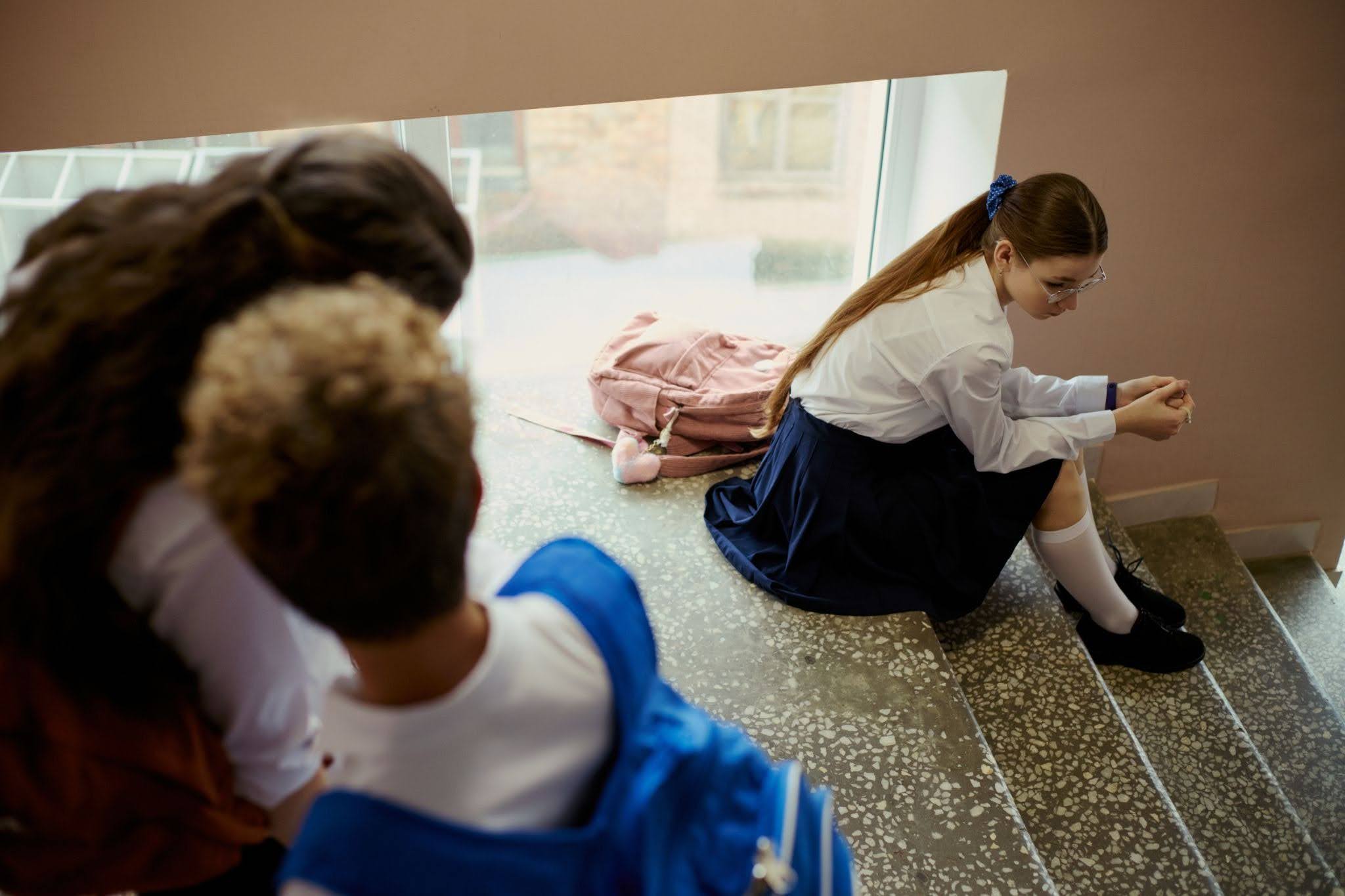
Middle childhood tends to activate wounds around belonging, competence, and social worth. If you were bullied, left out, or told you were too much or not enough between the ages of six and ten, watching your child navigate the lunch table is not a neutral experience. You are watching yourself. Often the version of yourself no one protected.
Adolescence is, for many parents, the most activating stage of all. The teenage push for independence, the emotional intensity, the need to differentiate from you — these mirror one of the most psychologically complex passages of human development. If you were not allowed to safely separate from your own parents, if your identity formation was controlled, punished, or simply ignored, your teenager's natural rebellion may feel like an attack rather than development.
The Three Ways Parents Respond — And What Each One Means
When the past gets activated in the present, most parental reactions fall into one of three patterns.
Repetition. You do what was done to you. Not because you believe it is right, but because it is the only template you have. The nervous system, under stress, defaults to the familiar. This is not a moral failure. It is what unexamined inheritance looks like.
Overcorrection. You swing so far in the opposite direction that you create a different kind of problem. The parent who was never allowed to cry raises a child with no structure around emotion. The parent who was controlled raises a child with no containment. The wound is still running the show - it just looks like its opposite.
Disappearance. You go emotionally absent. You are in the room, but you are not there. This is often the response of parents whose own distress was never metabolized - the feeling is simply too large to stay present with, so the system shuts down.
Understanding which pattern you default to is not about shame. It is about being able to see the wheel you are turning before you turn it again.
“The single strongest predictor of a child's secure attachment is not whether their parent had a good childhood. It is whether the parent has made sense of the childhood they actually had.”
This is sometimes called narrative coherence — the ability to tell your own story with clarity, honesty, and without either collapsing into it or dismissing it. Parents who can do this raise children who feel safe, even if the parent's history was anything but.
You do not need a different past. You need a different relationship with the one you have.
What This Looks Like in Practice
Making sense of your history does not mean excavating every painful memory in exhaustive detail. It means developing enough awareness to catch yourself mid-pattern. It means learning to pause between the trigger and the response - even a few seconds of I notice I am activated right now changes what happens next.
It means grieving what you did not get so you stop unconsciously looking for your child to provide it. It means recognizing that the child standing in front of you is not you - and that the safety you offer them is also, in some quiet way, the safety you are finally offering yourself.
This Is What Therapy Can Hold
If you find yourself reacting to your child in ways that surprise or scare you, you are not broken. If you hear a voice coming out of your mouth that does not feel like yours, if you shut down when you most want to show up, if you love your child fiercely and still find yourself repeating something you swore you never would - this is not evidence that something is fundamentally wrong with you.
It is evidence that something inside you is ready to be understood.